
Nut slotting dial gauge
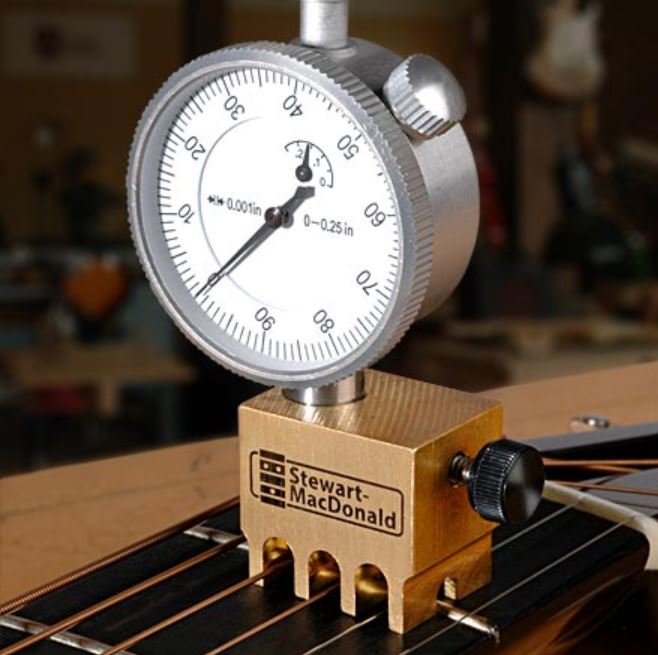
This nut slotting dial gauge precisely measures the heights of the strings over the first fret, so you can cut accurate string slots. When filing nut slot depths, you see your results more accurately than ever before. No more guesswork or "eyeballing" the string heights - you can set the playability with consistent, repeatable results. It features an easy to read dial indicator with adjustable zero point, and it's super accurate to .001". The machined brass base fits over the strings to rest on the fingerboard, and it works with most acoustic and electric guitars, mandolins and banjos. The base is gently arched to follow any fretboard radius. Instructions are included.
A larger brass base version is available to order to fit bass string spacings - let us know if interested in this model.
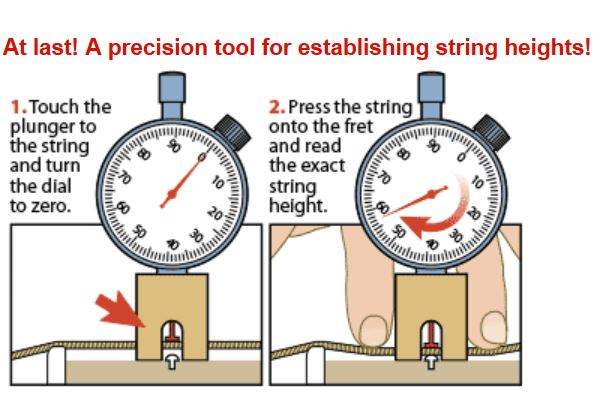
Step 1: Set the gauge over the first fret, with the indicator tip resting on the middle of a string. To zero the dial indicator, loosen the dial lock (located at the approximate 1 o'clock position of the dial). Turn the knurled dial face so the zero mark is lined up with the needle and re-tighten the dial lock. Note that for most applications, the zero will not be in the 12 o'clock position. Press the string down to the first fret. Press on both sides of the fret, to be sure you get an accurate reading. The dial now indicates the height of the string over the first fret.
Step 2: Pull the string out of the nut slot. File the slot deeper, replace the string and take another reading. Repeat until you reach the height you need.
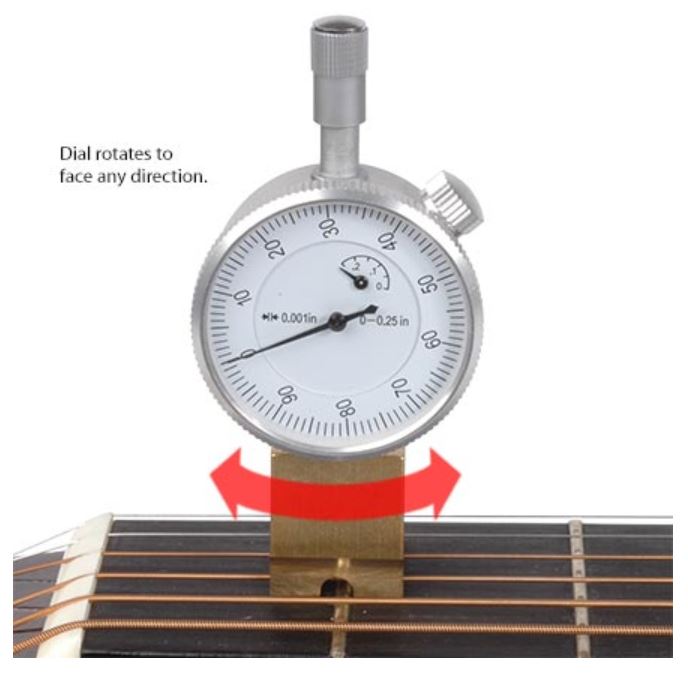
Step 3: Move the gauge to each of the remaining strings and follow the same procedure. The thumbscrew that holds the dial indicator post in place can be loosened, and the indicator rotated 180 degrees. This lets you keep all of the gauge's feet on the fretboard and still view the dial from the same side as you move the gauge across the neck.